Buying leather sounds simple until you actually shop.
You see labels like Real Leather, Genuine Leather, and sometimes 100% Leather. Then you check the price, and it makes zero sense. One “genuine leather” wallet is cheap. Another “real leather” jacket is expensive. Both claim to be “authentic.” This is what we are going discuss with immense detail: “Real Leather and Genuine Leather“.
So what is going on?
Here is the truth. Real leather usually points to better quality leather, often from the top layer of the hide, like full grain leather or top grain leather. Genuine leather is still made from animal hide, but it often comes from lower layers. It is more processed, more painted, and more likely to wear out faster.
That does not mean every genuine leather product is bad. It means you need to know what the label usually signals, and what to check next.
Real leather vs genuine leather in simple words
Real leather often means higher grade leather, usually full grain or top grain, made from the stronger outer layer of the hide. It lasts longer, breathes better, and develops a natural patina.
Genuine leather is real animal hide too, but it is commonly a lower grade made from inner layers. It is often heavily finished, and it may crack, peel, or look worn sooner.
If you want the safest long term choice, pick real leather made from full grain or top grain. If you want a lower price and can accept shorter life, genuine leather can still work.
Why This Confuses Buyers So Often
The label problem: words that sound premium
The word genuine sounds like it should mean “best” or “original.” In daily life, genuine means “real.” That is why many buyers feel confident when they see genuine leather on a tag.
But in the leather world, those words can work differently.
In many products, “genuine leather” is used as a grade signal, not a “best quality” signal. It often sits below full grain and top grain. That is where confusion starts.
“Real leather” is not one exact grade either
Here is another twist.
“Real leather” is not always a strict grade name. Some brands use it to mean “this is not PU leather or faux leather.” Others use it to hint at higher quality.
So the label alone is not enough. You need the context.
If a product says “real leather” and also tells you full grain or top grain, that is a strong sign of quality. If it only says “real leather” with no other details, you still need to check the leather type and construction.
Why do many listings avoid clear details
Many brands do not write “split leather” or “bonded leather” on product pages because those words can reduce sales.
Instead, you may see softer phrases like:
- Genuine leather upper
- Leather shell
- Leather blend
- Premium leather feel
These are not always lies. They are just not specific. And when the details are missing, buyers assume the best.
Price makes it even more confusing
Sometimes a genuine leather item costs more than a real leather item. That can happen because price is not only about leather quality.
Price can also include:
- Brand name
- Hardware quality (zippers, buckles)
- Stitching and lining
- Design and cut
- Retail markup
So you cannot judge only by price, and you cannot judge only by the label. You need to understand what these terms usually mean, then match them with simple checks.
A Simple Way to Think About It
Imagine the hide like a layered cake.
The top layer is tougher, tighter, and more natural looking. That is where the best leather usually comes from.
The lower layers can still be real leather, but they are weaker and often need more processing to look smooth and uniform. That is where “genuine leather” often lands in the market.
This is why real leather vs genuine leather is not just about “real or fake.” It is about which part of the hide, and how much it was processed.
Real Leather vs PU Leather: What Is the Difference Between Real Leather and Faux Leather?
A lot of people think faux leather is just another kind of leather. It is not.
Real leather is made from animal hide. It has natural fibers, so it breathes, feels warmer, and ages with time. It can also develop a patina and last for years.
Faux leather is not animal hide. It is usually PU leather (polyurethane leather) or another synthetic leather material. That means it is a plastic layer over fabric. It often looks very smooth and consistent, but it does not age like real leather. Instead of patina, it may start cracking or peeling later.
Quick difference
- Real leather: animal hide, breathable, warm feel, long-lasting
- Faux leather (often PU leather): synthetic, plastic-coated fabric, easy to wipe, can peel or crack over time
If you want something that improves with age, real leather wins. If you want a cheaper, vegan, easy-clean option, faux leather can make sense.
What You Will Learn in the Next Parts
In the next sections, we will make this crystal clear with real examples.
You will learn:
- The exact leather layers and grades, explained simply
- A comparison chart including PU leather, polyurethane leather, faux leather, vegan leather, synthetic leather, and rexine
- Easy tests like smell, pinch, backing, and water drop checks
- What happens when real leather or genuine leather gets wet
- Which one to choose for jackets, bags, belts, shoes, and furniture
For now, keep this one key idea in mind.
Real leather usually points to higher quality. Genuine leather is usually lower grade, still real, but more processed and less durable.
Leather Basics in 90 Seconds
Before we compare real leather vs genuine leather in detail, you need one simple picture in your head.
Leather comes from animal hide. Think of that hide like a layered sheet.
The top layer is the strongest. It has the natural grain, tiny pores, and real character. This is the layer that ages beautifully and can last a long time.
The lower layers are still leather, but they are not as strong. They often need more processing to look smooth and consistent.
That one idea explains most of the market.
What leather is made from
Leather is made by tanning animal hides, usually cowhide, but also sheep, goat, and others. Tanning turns raw hide into a stable material that can be used for jackets, belts, bags, shoes, and furniture.
Not all leather is the same because hides are not the same, and the cut is not the same.
The top layer vs inner layers (why it matters)
The top surface of the hide is dense and tight. That tight fiber structure is a big reason high quality leather:
- Lasts longer
- Resists tearing
- Develops a patina instead of cracking fast
- Breathes better than many synthetics
As you go deeper into the hide, the fiber structure becomes looser. That leather can still be real, but it usually does not perform like the top layer.
Where “real leather” and “genuine leather” usually come from
This is where labels start to make sense.
- Real leather is often used to describe higher quality leather, especially when it is full grain leather or top grain leather.
- Genuine leather is usually used for lower grade leather made from the inner layers. It is real animal hide, but it is more processed and often finished with heavy coatings.
Again, these are “usually” patterns in the market. Some brands use terms loosely. That is why you should look for extra clues like “full grain” or “top grain.”
Real Leather vs Genuine Leather (Deep Explanation)
Quality and durability
This is the biggest difference buyers feel after a few months.
Real leather made from full grain or top grain can last for many years, even decades, if cared for properly. It handles bending, friction, and daily wear much better.
Genuine leather is often thinner and weaker. It can still last, but it is more likely to:
- Lose shape faster
- Show scuffs quickly
- Crack around stress points
- Peel if it has a heavy surface finish
So if you want leather that grows stronger in your life, real leather is the safer bet.
Appearance and texture
High quality leather looks alive.
Real leather often shows:
- Natural grain variation
- Tiny pores
- Slight marks that prove it is natural
- Depth in color
Over time, it develops patina, which is that rich, slightly glossy look that happens with use.
Genuine leather is often treated to look perfect. Many genuine leather products are:
- Sanded down
- Coated with pigment
- Embossed with a fake grain pattern
That creates a very uniform look. It can look nice at first, but it often lacks the natural depth and aging that people love in real leather.
Feel in hand
Touch tells you a lot.
Real leather tends to feel:
- Warm
- Soft but strong
- Flexible without feeling flimsy
Genuine leather can feel:
- Stiffer
- More “painted”
- Slightly plastic-like, especially if the top is heavily coated
Not always, but often.
Price and value
This is where many people get trapped.
Genuine leather is cheaper, so it feels like a smart deal. But if it cracks or peels early, you end up replacing it sooner. That can cost more over time.
Real leather costs more upfront, but it usually gives better value because it lasts longer and ages better.
A simple way to think about it:
- Genuine leather is often a “short to mid-term buy.”
- Real leather is often a “long-term investment.”
Repairs and long term use
Real leather is more forgiving.
Small scratches on full grain or top grain can often be:
- Conditioned
- Buffed lightly
- Blended naturally as patina forms
Genuine leather with a heavy surface finish does not always repair well. If the top coating cracks, you cannot truly fix it the same way. Many times, it keeps spreading.
So What Exactly Counts as “Real Leather”?
Here’s the clean version.
Real leather is not a single grade. It is a broad term people use for animal hide leather. But when shoppers say “real leather,” they usually mean better leather, like:
Full grain leather (top tier)
Full grain uses the top layer and keeps the natural grain. It is strong, breathable, and ages the best. It shows natural marks because it is not sanded flat.
Top grain leather (very high quality)
Top grain also comes from the top layer, but it is lightly sanded or corrected to remove imperfections. It still performs well and looks smooth. Many premium brands use top grain.
Both of these are what people expect when they hear “real leather.”
What Exactly Is “Genuine Leather” Then?
Genuine leather is still real animal hide, but it is usually made from lower layers, commonly called split leather.
It is often processed to look more even. That can include:
- Sanding
- Heavy pigment coating
- Embossing for a uniform pattern
This is why genuine leather often:
- Looks more consistent
- Costs less
- Does not develop strong patina
- Can fail earlier at bends and edges
Important point: genuine leather is not fake. It is just often lower grade.
Real leather vs genuine leather
- Real leather (full grain or top grain) comes from the strong outer layer of the hide. It lasts longer, breathes better, and develops a patina.
- Genuine leather often comes from inner layers and is more processed. It is cheaper, looks more uniform, and may crack or peel sooner.
Comparative Chart (Real Leather vs Genuine Leather vs PU Leather and More)
This is the part most people want. A clean chart that makes the differences obvious.
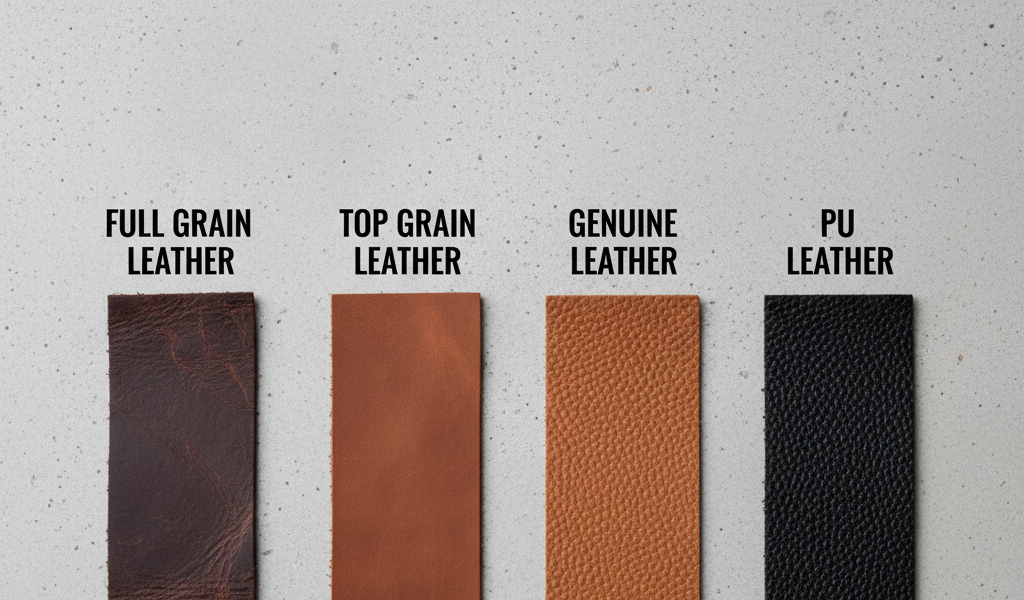
But quick reminder: terms like Real Leather and Genuine Leather are often used as labels, not strict science words. So the chart below is based on how these materials are most commonly sold and used in jackets, bags, belts, shoes, and furniture.
| Feature | Real Leather (Full Grain / Top Grain) | Genuine Leather (Often Split Leather) | PU Leather (Polyurethane Leather) | Faux Leather / Synthetic Leather / Vegan Leather / Rexine* |
|---|---|---|---|---|
| What it is | Top layer of animal hide | Inner layers of animal hide | Plastic coating over fabric base | Usually plastic-based material (PU or PVC) |
| Is it real animal hide? | Yes | Yes | No | No |
| Look | Natural grain, small variations | Often uniform, embossed grain | Very uniform, “perfect” surface | Very uniform, often glossy or flat |
| Feel | Warm, supple, flexible | Can feel coated, stiff at first | Cooler touch, plastic-like | Often cooler, sometimes rubbery |
| Breathability | High | Medium to low (depends on finish) | Low | Low |
| Aging | Develops patina, improves with time | Limited patina, can look tired faster | Does not develop patina | Does not develop patina |
| Durability | Very high | Medium to low | Low to medium | Low to medium |
| Common failure | Scratches that blend over time | Cracks or surface damage in stress points | Peeling, cracking, flaking | Peeling, cracking, flaking |
| Lifespan (typical) | 10–30+ years | 3–10 years (varies a lot) | 6–24 months (often) to a few years | Similar to PU or PVC depending on quality |
| Water behavior | Absorbs water, needs drying care | Absorbs water, may stain easier | Water resistant on surface | Water resistant on surface |
| Maintenance | Needs conditioning | Needs care, finish may limit repair | Easy wipe, but short life | Easy wipe, but short life |
| Repairability | High (can be restored) | Medium to low | Low | Low |
| Price level | Highest | Budget to mid | Low | Low |
| Best for | Long term jackets, boots, premium bags | Budget leather goods, occasional wear | Trend items, low cost use | Long term jackets, boots, and premium bags |
Quick Takeaways From the Chart
1) “Real leather” usually means the top layer of hide leather
If you see full grain leather or top grain leather, that is a strong sign you’re looking at the better end of real leather. It tends to last longer and feel better with age.
2) “Genuine leather” is real, but often a lower grade
It is still animal hide. It is not the same as plastic. But it is often made from the lower layers and finished heavily, so it may not breathe well and may not age the same way.
3) PU leather is not leather, even if it looks like it
PU leather (also called polyurethane leather) is basically a plastic surface on top of fabric. It can look neat and uniform. It can also crack and peel sooner, especially on high-bend areas like elbows, seat cushions, and bag corners.
4) Faux leather, vegan leather, synthetic leather, and rexine are often “category words.”
These words are used in marketing. They usually point to “non-leather” materials, often PU or PVC-based.
So the real question becomes: what is it made of, and how long do you want it to last?
“At a Glance” Differences
Real Leather (Full Grain / Top Grain)
- Made from the top layer of hide
- Breathable and warm
- Develops patina
- Usually lasts for many years
Genuine Leather
- Made from hide, often from the inner layers
- More processed and coated
- Cheaper than top grades
- Can crack or wear faster, depending on the finish
PU Leather (Polyurethane Leather)
- Plastic coating on fabric
- Very uniform look
- Easy to wipe clean
- More likely to peel and crack over time
Faux Leather / Vegan Leather / Synthetic Leather / Rexine
- Usually PU or PVC based
- Non-animal option
- Often lower breathability
- Lifespan depends heavily on quality
What This Means in Real Shopping (Simple Examples)
Staff picks
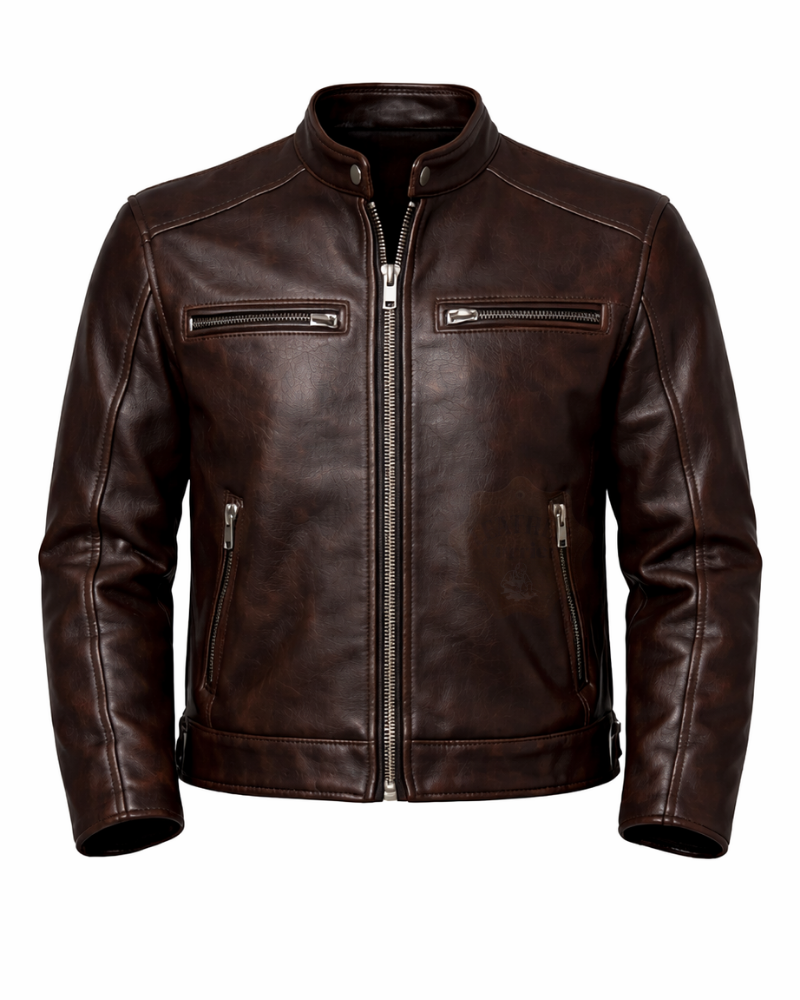
1950s Café Racer Style Leather Jacket – Dark Brown
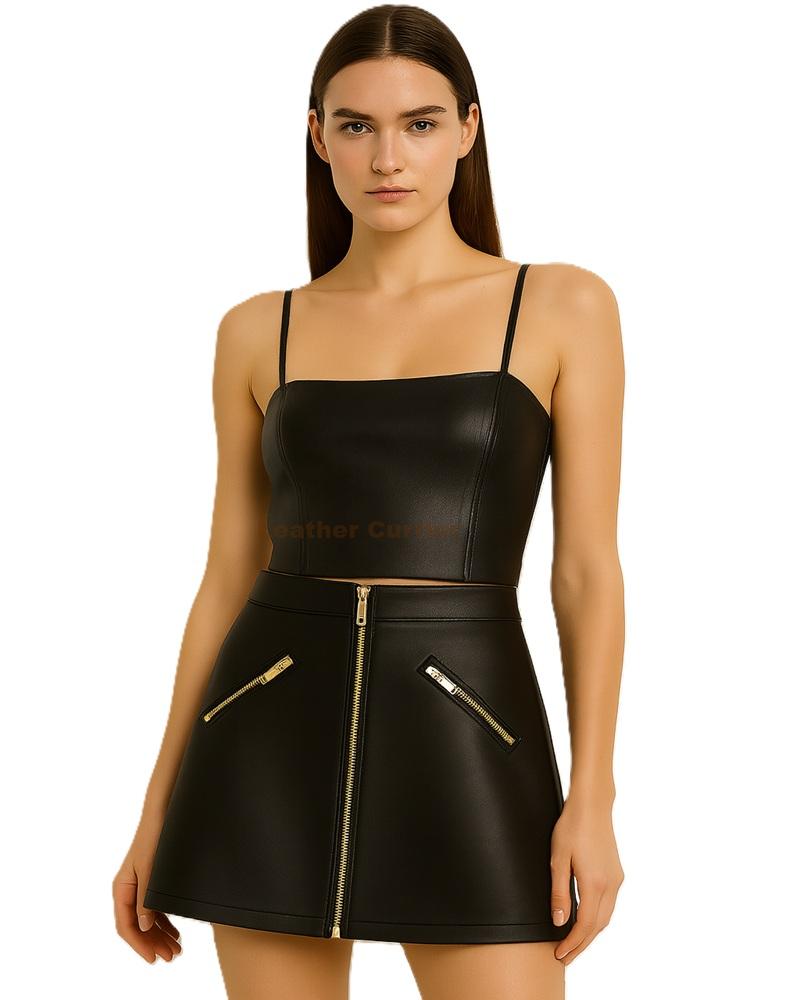
Price range: $129.00 through $179.00Black Leather Corset with Skirt for Women
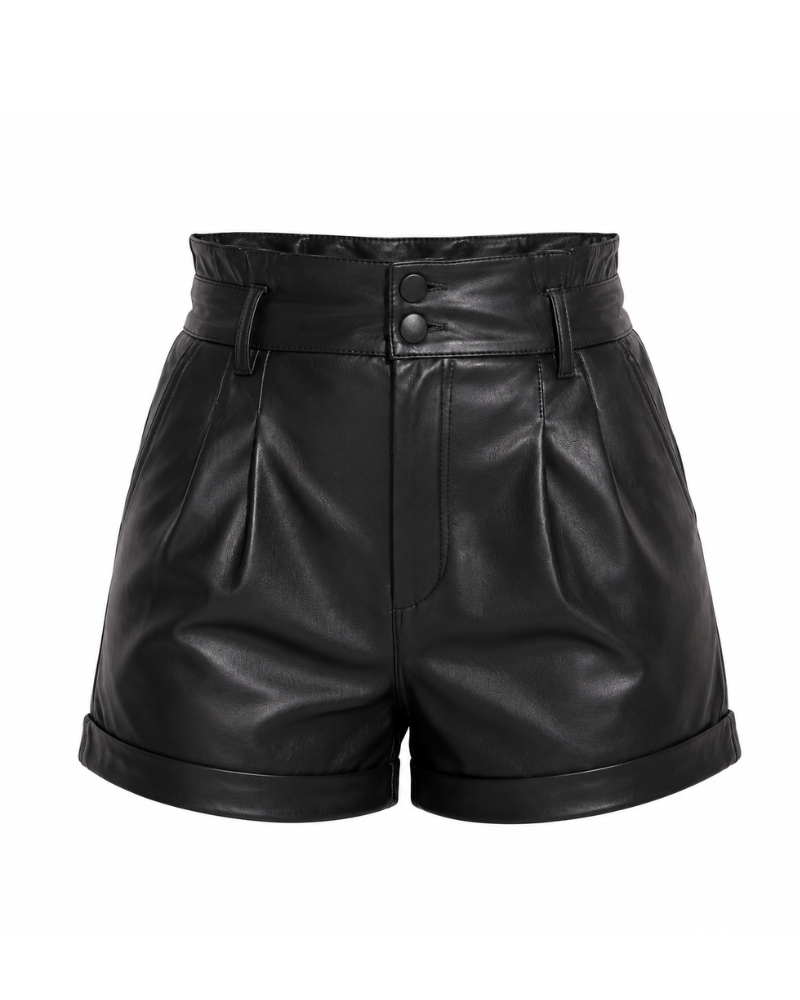
Price range: $220.00 through $240.00Black Leather Shorts for Women
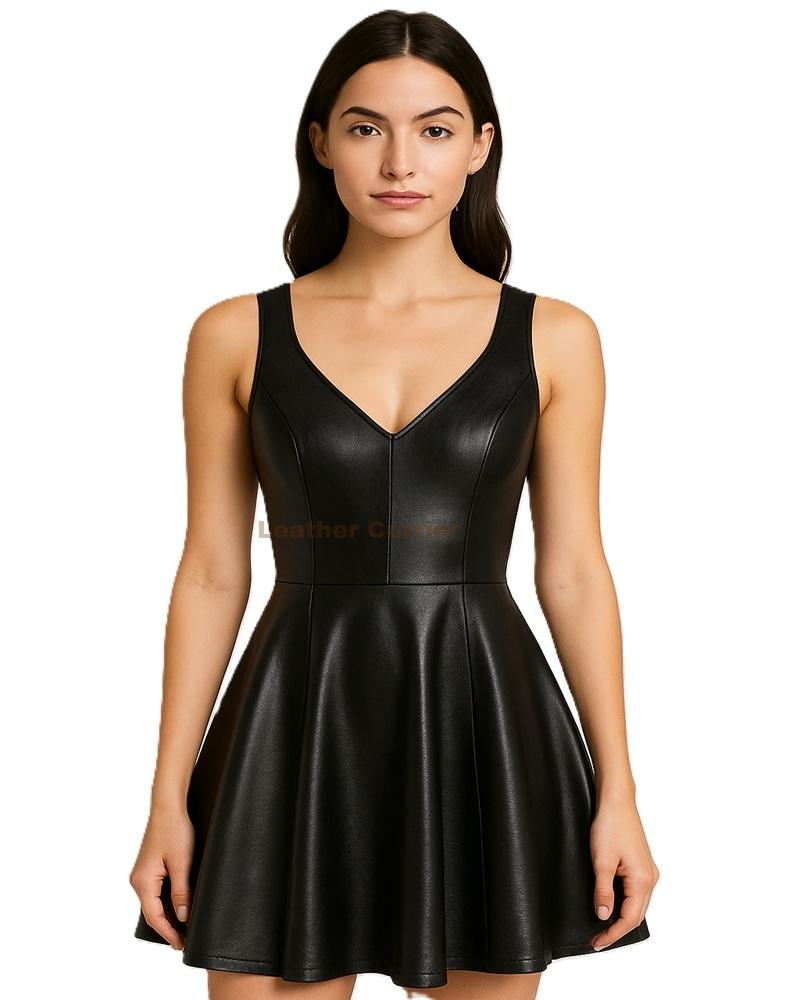
Price range: $109.00 through $149.00Black Leather Skater Skirt Outfit For Women
Price range: $220.00 through $240.00
If you’re buying a jacket
Pro tip: Always buy the jacket from the best online leather jacket store – Reference this LinkedIn Post
If you want a jacket that gets better every year, go for real leather made from full grain or top grain. It will soften, shape to you, and build character.
If you only need a jacket for occasional wear and you want a lower price, genuine leather can work. Just pick a well-stitched piece and avoid super shiny, thick coatings.
If you want a trendy look for one season, PU leather or faux leather can be fine. Just don’t expect long life.
If you’re buying a sofa
PU leather might look good at first. Then the peeling starts where you sit the most. This is common.
Real leather holds up better, especially in the areas that take daily stress.
Micro Checklist Before You Buy (No Geek Talk)
- If it says full grain or top grain, you’re in a safer zone.
- If it only says genuine leather, ask: is it split leather? is it heavily coated?
- If it says PU leather or polyurethane, treat it as synthetic.
- If it says vegan leather or rexine, ask if it is PU or PVC, and check reviews for peeling.
Real Leather vs PU Leather (Polyurethane Leather)
A lot of people compare real leather vs genuine leather, but the bigger confusion today is PU leather vs real leather. Why? Because PU leather looks clean, smooth, and “perfect” in photos. It can even fool experienced buyers on a screen.
So let’s break it down in a very clear way.
What real leather is
Real leather is made from animal hide. It has a natural fiber structure, which is why it:
- Breathes better
- Feels warmer in the hand
- Stretches and wrinkles naturally
- Develops patina over time
When you wear a real leather jacket, it slowly molds to your body. It does not stay stiff forever. It becomes yours.
What PU leather is
PU leather means polyurethane leather. It is not animal hide.
PU leather is made by applying a plastic coating (polyurethane) onto a fabric base, often polyester or cotton. That is why it is also called synthetic leather in many listings.
So PU leather is basically:
- Fabric underneath
- Plastic layer on top
It can look like leather, but it behaves like plastic.
Key Differences Between Real Leather and PU Leather
Material and composition
- Real leather: animal hide (cow, sheep, goat, etc.)
- PU leather: plastic coating on fabric (polyurethane + textile base)
Durability and lifespan
Real leather can last a long time if cared for. In many everyday items, it can last 10 to 30+ years.
PU leather often has a much shorter life. Many PU items start showing damage in 6 to 24 months, especially where there is constant bending, heat, sweat, or friction.
Not every PU product dies quickly. Higher quality PU can last longer. But peeling and cracking are common in the long run.
Appearance and texture
Real leather has natural variation. Even two pieces cut from the same hide won’t look exactly the same. It also develops patina, meaning it changes with use.
PU leather is usually very consistent. It can look “too perfect.” The grain pattern may repeat like a printed stamp, and it stays looking the same until it starts peeling.
Breathability
Real leather has pores. Air can pass through. That helps with comfort in jackets, shoes, and seats.
PU leather is not breathable in the same way. It can feel sticky in heat, especially in clothing and seating.
Maintenance
PU leather is easier for quick cleaning. You can often wipe it with a damp cloth.
Real leather needs more care. It likes gentle cleaning and conditioning, especially in dry weather.
But here is the tradeoff.
PU leather is easier to clean, but harder to save once it starts peeling. Real leather needs care, but it is more repairable.
Environmental impact (simple and balanced)
Real leather is natural and can biodegrade over time, though tanning and processing have environmental cost.
PU leather is petroleum-based plastic. It does not biodegrade easily, and it can shed microplastics as it breaks down.
So neither is “perfect.” They are just different. Your best choice depends on your values and your use.
How Real Leather and PU Leather Fail Over Time
How real leather usually ages
Real leather often:
- Softens with wear
- Forms natural wrinkles
- Gets richer in color
- Develops a patina
- Can be restored with conditioning
Scratches happen, yes. But many scratches blend into the leather’s character.
How PU leather usually ages
PU leather often:
- Stays the same at first
- Then develops small surface cracks
- Then starts peeling or flaking
- Edges and corners fail first
Once PU leather peels, it is very hard to truly fix. You can patch it, but you cannot make it “original” again.
Real Leather vs PU Leather: How to Tell the Difference (Practical Tests)
These tests are simple. You don’t need lab tools. Just your senses.
1) Smell test
- Real leather: earthy, rich, natural leather smell
- PU leather: chemical or plastic smell, sometimes like glue
This is one of the fastest checks.
2) Touch and temperature test
- Real leather: feels warmer and more natural
- PU leather: often feels cooler and slicker
PU leather can feel like a smooth film on top, because it is.
3) Pinch test
Pinch the material between your fingers.
- Real leather: stretches slightly and forms soft folds
- PU leather: wrinkles in a sharper way and springs back like plastic
4) Bend test
Bend the leather and watch the surface.
- Real leather: shows fine wrinkles and grain movement
- PU leather: may crease sharply, and the surface may look “separated” from the base
5) Backing check (best test if you can see the underside)
- Real leather: rough fibrous underside, sometimes like suede
- PU leather: fabric backing (woven or felt)
If you see fabric underneath, it is likely PU or another synthetic.
6) Water drop test (use carefully)
Put one small drop of water on an unseen area.
- Real leather: absorbs water slowly and darkens slightly
- PU leather: water sits on top and does not absorb quickly
This one is useful, but do it on a hidden spot.
When PU Leather Can Be a Smart Choice
PU leather is not “evil.” It has uses.
Choose PU leather when:
- You want a low budget option
- You want easy cleaning
- You need bright colors or a very uniform look
- You want a non-animal option (often sold as vegan leather)
- You are buying a trend piece for short-term use
But be honest with yourself about lifespan. If you want something that lasts and improves with time, PU leather is usually not it.
When Real Leather Is the Better Choice
Choose real leather when:
- You want long life
- You want comfort and breathability
- You want patina and natural aging
- You want something repairable
- You are buying jackets, boots, belts, or daily-use bags
Real leather costs more, but it often pays back over time.
Mini Summary
Real leather is animal hide. It breathes, warms in hand, and develops patina. It can last 10 to 30+ years. PU leather is polyurethane plastic over fabric. It is cheaper and easy to wipe clean, but it is less breathable and can crack or peel within months to a few years.
Genuine Leather vs PU Leather (Polyurethane Leather)
This comparison is super common because many buyers are choosing between two “budget friendly” options.
One says genuine leather and feels like a real upgrade. The other says PU leather or polyurethane leather and looks very neat and modern.
But they are not the same material at all.
What genuine leather really is
Genuine leather is made from animal hide. So yes, it is real leather in that sense.
The issue is quality. Genuine leather is often made from lower layers of the hide and finished heavily. That can reduce breathability and shorten lifespan compared to full grain or top grain.
Still, genuine leather has one big advantage.
It is leather fibers, not plastic film.
What PU leather really is
PU leather is not leather. It is a plastic coating over fabric.
That coating can look nice in photos, but it does not behave like hide leather. It can crack, peel, and flake as the plastic layer breaks down.
| Feature | Genuine Leather | PU Leather (Polyurethane Leather) |
|---|---|---|
| Material | Animal hide (often split layers) | Plastic coating on fabric |
| Is it real leather? | Yes | No |
| Lifespan (typical) | Often 3–10 years, can be longer with good build | Often 6–24 months to a few years |
| Feel | Softer, more natural, can warm up | Smooth, cold, plastic-like |
| Breathability | Medium to high depending on finish | Low |
| Aging | Can develop some character | No patina, surface may crack |
| Water | Absorbs water, can stain | Water resistant on surface |
| Repairs | Some repairs possible | Hard to repair once peeling starts |
| Price | Budget to mid | Medium to high, depending on finish |
Which One Is Better, PU Leather or Genuine Leather?
If we’re talking long-term use, genuine leather is usually better than PU leather.
Why?
Because even lower grade hide leather usually handles:
- Bending
- Friction
- Daily movement
- Better than a plastic coated surface.
PU leather can be fine for light use, but it often fails where it bends the most.
When PU leather can still win
PU leather can be a better choice when:
- You want something very low cost
- You want easy wipe-clean care
- You want bright colors or a very consistent look
- You want a vegan or non animal option
So “better” depends on your goal. But for durability and comfort, genuine leather usually beats PU.
The Honest “Pros and Cons” (Simple)
Genuine Leather
Pros
- Real animal hide
- More breathable than PU
- Often lasts longer than PU
- More comfortable for jackets, shoes, belts
- Can be repaired in some cases
Cons
- Not the top grade (usually)
- May be heavily coated and less natural looking
- Can crack if dry and not cared for
- Not vegan
PU Leather (Polyurethane Leather)
Pros
- Affordable
- Easy to clean
- Lightweight
- Comes in many colors
- Often marketed as vegan leather
Cons
- Lower durability
- Peels and cracks with time
- Not breathable, can feel sticky
- Plastic based, not biodegradable
How to Tell Genuine Leather vs PU Leather (Fast Checks)
Smell
- Genuine leather: earthy, rich smell
- PU leather: chemical or plastic smell
Texture
- Genuine leather: small grain variation, not perfectly uniform
- PU leather: very uniform, “printed” look
Water behavior
- Genuine leather: absorbs water and darkens
- PU leather: water sits on top
Flex test
- Genuine leather: soft wrinkles, natural fold
- PU leather: sharp crease or stiff bend
Backing
If you can see the underside:
- Genuine leather: fibrous underside, sometimes suede-like
- PU leather: fabric backing
Faux Leather, Vegan Leather, Synthetic Leather, Rexine (Clear Meanings)
These terms are thrown around a lot. Many people think they are different materials. Often, they are just different labels for similar things.
Faux Leather
Faux leather means “fake leather.” It usually refers to a synthetic material like PU or PVC. It is designed to look like leather but is not animal hide.
Vegan Leather
Vegan leather means “no animal hide.” That does not automatically mean high quality. Many vegan leather products are simply PU leather with nicer branding.
Some vegan leather can be plant-based. But in everyday shopping, most “vegan leather” is still synthetic.
Synthetic Leather
Synthetic leather is an umbrella term. It can include:
- PU leather (polyurethane leather)
- PVC leather
- other plastic based leather-look materials
So, synthetic leather is a category, not one exact thing.
Rexine
Rexine is a word widely used in South Asia. Many people use it to mean “leather-like sheet material,” often for:
- Cheap jackets
- School bags
- Seat covers
- Furniture covering
In many cases, rexine is PVC or PU based. The important point is simple.
Rexine is usually not animal hide leather.
So rexine sits closer to faux leather and synthetic leather, not real leather.
Where Each Material Makes Sense (Real Shopping Guide)
Jackets
- Best long-term: real leather (full grain or top grain)
- Budget but still hide: genuine leather
- Trend, short-term: PU leather, faux leather, rexine
Bags and wallets
- Best value long-term: real leather
- Budget: genuine leather
- Fashion colors and quick use: PU leather
Furniture
- If you want long-term seating: real leather
- If you want low cost and easy wipe, PU leather can work, but peeling risk is high in high-use areas
Belts
- Real leather belts last and shape well
- PU belts often crack or split
- Genuine leather belts can be decent, but quality varies, so construction matters a lot
- Genuine leather is animal hide, often from lower layers, more processed, and usually more durable than PU.
- PU leather (polyurethane leather) is a plastic coating on fabric. It is cheaper and easier to clean, but it can peel and crack.
- Faux leather, vegan leather, synthetic leather, rexine usually mean non-animal leather alternatives, often PU or PVC based.
Bestsellers
1950s Café Racer Style Leather Jacket – Dark Brown
Price range: $129.00 through $179.00Black Leather Corset with Skirt for Women
Price range: $220.00 through $240.00Black Leather Shorts for Women
Price range: $109.00 through $149.00Black Leather Skater Skirt Outfit For Women
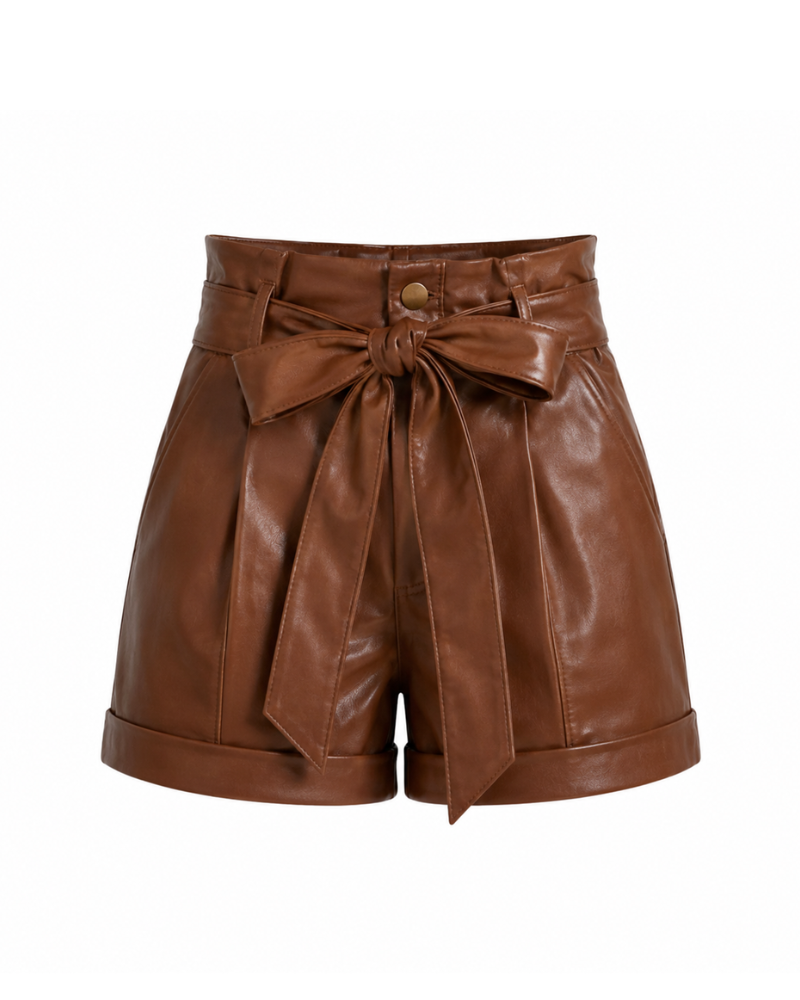
Price range: $220.00 through $240.00Brown Leather Shorts for Women
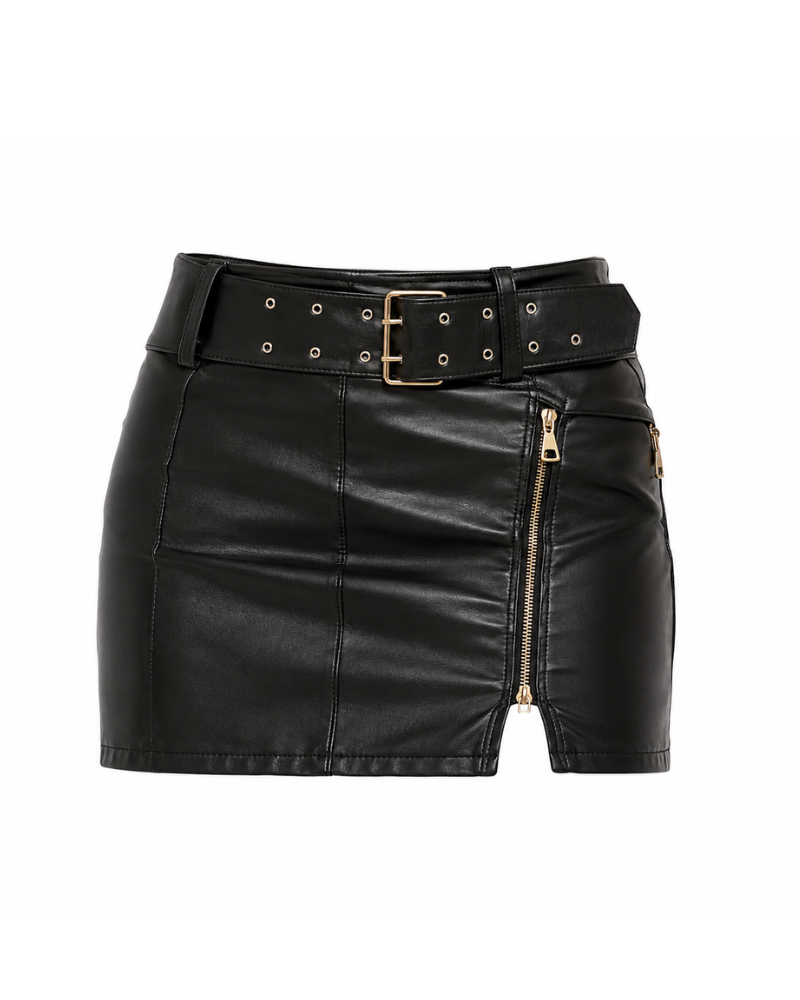
Price range: $109.00 through $149.00Buckle Style Leather Mini Shorts
Price range: $109.00 through $149.00
How to Tell the Difference (Simple Tests That Actually Work)
Labels can be vague. Photos can be misleading. So the best approach is to use a few quick checks that work in real life.
You do not need special tools. You just need to know what to look for.
1) Smell Test (Fastest clue)
Bring it close and smell it.
- Real leather usually has a deep, earthy, slightly sweet leather smell.
- Genuine leather also smells like leather, but sometimes lighter because of coatings.
- PU leather and many faux leather items can smell like plastic, glue, or chemicals.
Smell alone is not a full proof test, but it is a strong first filter.
2) Touch and Temperature Test
Touch it with your palm and hold for a few seconds.
- Real leather warms up in your hand and feels more “alive.”
- Genuine leather may warm up too, but heavy finishes can make it feel a bit coated.
- PU leather (polyurethane leather) often feels cooler and smoother, like a thin film.
If it feels like plastic wrap on top of fabric, it is usually synthetic leather.
3) Grain and Pattern Check (Look closely)
Look for the grain pattern. Do the pores look random or repeated?
- Real leather grain looks natural and irregular.
- Genuine leather may look uniform if it is embossed, but it often still has some depth.
- PU leather grain can look stamped and repeated, like the same pattern copied again and again.
A “too perfect” surface is often a sign of PU leather or rexine.
4) Pinch Test (Great for jackets and bags)
Pinch a small area and release.
- Real leather forms soft folds and relaxes slowly.
- Genuine leather can do this too, but may feel firmer if heavily coated.
- PU leather often wrinkles sharply and springs back fast, like plastic.
5) Bend Test (Best for belts and shoes)
Bend the material and watch what happens on the surface.
- Real leather shows fine wrinkles that look natural.
- Genuine leather may wrinkle, but the finish can crease.
- PU leather can form a hard crease line. Over time, those crease lines become cracks.
This is why PU belts often fail at the same bend spot.
6) Edge Test (Look at cut edges)
If you can see the edge, it reveals a lot.
- Real leather edges look fibrous and natural.
- Genuine leather edges may still look fibrous, but coatings can hide it.
- PU leather edges can look layered: fabric inside, plastic outside.
If the edge looks like a plastic sheet wrapped around fabric, you are likely holding synthetic leather.
7) Backing Test (Most reliable if visible)
This is the clearest test when you can see the underside.
- Real leather: rough, natural, suede-like backing
- Genuine leather: often has a fibrous or suede-like backing too
- PU leather: fabric backing (woven or felt)
So if you see fabric underneath, it is usually PU leather, faux leather, vegan leather, synthetic leather, or rexine.
8) Water Drop Test (Use carefully)
Put one small drop on a hidden area.
- Real leather absorbs water and darkens slightly.
- Genuine leather usually absorbs too, sometimes unevenly.
- PU leather resists water on the surface. The drop sits on top.
This is useful, but only do it in a hidden spot because water can stain real leather if left too long.
What Happens If Leather Gets Wet? (Real vs Genuine vs PU)
This is where people panic. They get caught in rain, spill water, or something gets wet in shipping.
Water is not the end of the world. The problem is how you dry it.
What happens if real leather gets wet?
Real leather is porous, so it absorbs water. You may see:
- Darker patches
- Stiffness after drying
- Slight waviness
If you dry it correctly, real leather usually recovers well.
The risk comes when people use heat, sunlight, or hair dryers. Heat can dry out the oils in leather. That can cause cracking later.
What happens if genuine leather gets wet?
Genuine leather also absorbs water. But it may be more sensitive because:
- It can be thinner
- It may have a heavy finish that reacts unevenly
- Stress points can weaken faster
If genuine leather gets wet repeatedly and is dried poorly, it can start looking tired faster than high-grade real leather.
What happens if PU leather gets wet?
PU leather is more water resistant on the surface. So the water often beads up and wipes away.
Sounds great, right?
But here is the hidden issue. If water gets into seams or edges, the fabric base can absorb moisture. Over time, moisture trapped under the plastic layer can help the surface break down faster.
So PU leather handles quick spills well, but it is not “invincible.”
Safe Drying Steps (Works for Real Leather and Genuine Leather)
If your leather jacket, bag, or belt gets wet, do this:
Step 1: Blot, do not rub
Use a dry soft cloth. Press gently. Rubbing can spread stains and damage the finish.
Step 2: Let it air dry at room temperature
Hang the item in a normal room. Keep it away from:
- Direct sunlight
- Heaters
- Hair dryers
- Hot air vents
Step 3: Keep shape while drying
For bags, stuff lightly with paper. For jackets, hang on a wide hanger. This prevents wrinkles and distortion.
Step 4: Condition after it is fully dry
Once it feels fully dry to the touch, apply a small amount of leather conditioner. This replaces oils that water can pull out.
Conditioning is especially important for real leather and genuine leather.
Safe Drying Steps (For PU Leather, Faux Leather, Rexine)
PU leather and other synthetic leather options are different.
Step 1: Wipe it dry
Use a clean cloth. Remove water quickly.
Step 2: Let it dry naturally
Room temperature is still best. Heat can damage the plastic surface.
Step 3: Avoid heavy oils and conditioners
Most leather conditioners are designed for animal hide. On PU leather, they can make the surface sticky or patchy.
A mild wipe is usually enough.
Extra Tips to Prevent Damage (Short but practical)
For real leather and genuine leather
- Condition occasionally, especially in dry weather
- Store away from humidity and direct sun
- Avoid soaking or leaving water spots to dry naturally without blotting
For PU leather and faux leather
- Keep away from high heat and constant friction
- Do not fold it tightly for long storage
- Clean gently and avoid harsh chemicals
Mini Summary
- Real leather absorbs water, can stiffen, but recovers well if air-dried and conditioned.
- Genuine leather also absorbs water and can be more sensitive if heavily finished or thin.
- PU leather (polyurethane leather) resists water on the surface, but moisture in seams can still cause long-term breakdown.
- Never use heat to dry any leather-like material.
Not always. Genuine leather means it contains real leather, but it does not automatically mean top quality, and it does not always mean the whole product is leather. Some items use genuine leather for the outer parts and use fabric or synthetic materials inside.
Many PU leather products last 6 to 24 months with regular use. Better quality PU can last longer, but peeling and cracking are common as the plastic layer breaks down, especially in high-bend areas.
Real leather, particularly high-quality full-grain leather, can last for 50 to over 100 years, while average leather jackets or goods typically last 5 to 30 years with proper care.
Use a few quick checks:
Smell: real leather smells earthy, fake leather often smells like plastic
Grain: real leather has natural, irregular grain, fake leather looks repeated and perfect
Backing: real leather underside is fibrous, fake leather usually hasa fabric backing
Water drop: real leather absorbs slowly, fake leather repels water
Feel: real leather warms in hand, fake leather feels colder and slick
Look for at least two strong signs:
It smells like real leather (not plastic or chemicals)
The grain looks natural and uneven (not stamped repeating patterns)
The underside is fibrous or suede-like (not fabric)
A tiny water drop absorbs slowly (on a hidden spot)
It wrinkles softly when bent (not a sharp plastic crease)
If a product passes most of these, it’s likely real leather.
No. PU leather is not real leather. It is a synthetic material made with a polyurethane plastic coating over a fabric base.
No. PU leather is synthetic leather, not animal hide leather. It can look similar, but it does not age, breathe, or last like real leather.
Usually, yes. Real leather is better when it refers to full grain or top grain leather because it lasts longer and ages better. Genuine leather can still be decent for the price, but it usually will not perform like full grain or top grain.
Genuine leather is usually real animal hide, so it can be “original” in the sense that it is not plastic. But “genuine” does not mean premium. If you want the most authentic, top tier leather, look for full grain or top grain wording.
Here’s the common ranking from highest to lowest:
Full grain leather
Top grain leather
Genuine leather (often split leather)
Bonded leather (made from leather scraps mixed with binders)
Genuine leather absorbs water, too. It can stain or stiffen, and lower grade leather may show wear sooner if it gets wet often. The safest method is the same: blot, air dry, then lightly condition once fully dry.
PU leather is often water resistant on the surface, so spills usually wipe off. But if water enters seams or edges, the fabric base can absorb moisture and may speed up cracking or peeling later. Dry it at room temperature and avoid heat.
Real leather absorbs water and may darken or feel stiff after drying. If you blot it, air dry it at room temperature, and condition it after it fully dries, it usually recovers well. Do not use direct heat or sunlight.
For long-term use, genuine leather is usually better than PU leather because it is real animal hide and handles bending and wear better. PU leather (polyurethane leather) is cheaper and easier to wipe clean, but it is more likely to crack or peel over time.
“Full leather” often means full grain leather, which is made from the strongest top layer of the hide and keeps the natural grain. Genuine leather is usually made from lower layers and is more processed, so it is typically less durable and less natural looking.
Shop new arrivals
1950s Café Racer Style Leather Jacket – Dark Brown
Price range: $129.00 through $179.00Black Leather Corset with Skirt for Women
Price range: $220.00 through $240.00Black Leather Shorts for Women
Price range: $109.00 through $149.00Black Leather Skater Skirt Outfit For Women
Price range: $220.00 through $240.00Brown Leather Shorts for Women
Price range: $109.00 through $149.00
The 4 Grades of Leather (Recap You Can Trust)
People throw around leather terms like they are all equal. They are not. Most leather quality falls into these four buckets, from best to worst.
Full grain leather (highest grade)
Full grain leather comes from the top layer of the hide and keeps the natural surface. It is strong, breathable, and it ages in a beautiful way.
It is also the type that can look “imperfect” in a good way. Small marks, pores, and grain variation are normal. That is what makes it real.
If you want leather that can truly become a long-term piece, full grain is the safest choice.
Top grain leather (very high grade)
Top grain also comes from the top layer, but the surface is lightly sanded or corrected. This creates a smoother look with fewer visible marks.
Top grain can still be excellent. Many premium brands use top grain because it looks clean and still lasts well.
Genuine leather (lower grade, but still real hide)
Genuine leather is real animal hide, but it is usually made from lower layers. It is commonly more processed and coated to create a uniform look.
It can be a good choice for the price, but it typically will not age like full grain or top grain. It is also more likely to show wear sooner.
Bonded leather (lowest grade)
Bonded leather is made from leather scraps mixed with binders and pressed into sheets. It often has a plastic coating on top.
Bonded leather can look good at first, but it is known for peeling and breaking down faster. It is more common in low-cost furniture and accessories.
Which One Should You Choose? (Simple Decision Guide)
This is the section that saves money. Because the “best” material depends on how you will use it.
Choose real leather when you want long-term value
Pick real leather, especially full grain or top grain, when you want:
- A jacket you will wear for years
- Boots that soften and shape to you
- A bag that gets better with time
- A belt that holds its shape and does not crack easily
Real leather costs more, but the cost per year is often lower because it lasts longer.
Choose genuine leather when budget matters, but you still want real hide
Genuine leather can make sense when:
- You want a real leather feel, but you cannot pay full-grain prices
- You wear the item occasionally, not daily
- You want a leather look with a lower upfront cost
If you choose genuine leather, focus on build quality:
- Stitching should be clean
- Edges should be finished well
- Hardware should feel solid
- The surface should not feel like thick plastic paint
Choose PU leather when you want low cost, easy cleaning, or a short-term trend
PU leather (polyurethane leather) is useful when:
- You want a budget option
- You want quick wipe-clean convenience
- You need a very consistent look and color
- You are buying fashion pieces for short-term use
Just do not expect it to age like real leather. PU leather does not develop patina. It often fails by cracking or peeling.
Choose faux leather or vegan leather when you want non-animal options
Faux leather, vegan leather, and synthetic leather can be good choices when:
- You prefer a non animal material
- You want a lighter item
- You do not want leather maintenance
But check the base material. Many vegan leather items are still PU based, so durability can be limited.
Common Myths and Marketing Traps (So You Don’t Get Played)
Myth 1: “Genuine leather means premium”
Genuine leather is real leather, but it is not the top grade in most cases. The premium terms you want to see are full grain or top grain.
Myth 2: “Real leather always means full grain”
Not always. Some brands use “real leather” as a general label. If they do not mention full grain or top grain, treat it as an unknown grade and use the tests from Part 6.
Myth 3: “100% leather means the best leather”
100% leather does not tell you the grade. It only suggests the leather parts are animal hide leather. The quality can still range from excellent to average.
Myth 4: “If it looks perfect, it must be high quality”
Sometimes the opposite is true. Very uniform grain can be a sign of embossing and heavy coatings. That can happen on genuine leather, and it is very common on PU leather and rexine.
Myth 5: “PU leather is basically leather”
No. PU leather is a plastic coating. It may be called synthetic leather or vegan leather, but it is not animal hide.
Final Wrap Up (Short and Practical)
If you remember only five things, remember these:
5 Line Summary
- Real leather usually points to higher quality, especially full grain or top grain.
- Genuine leather is real hide too, but it is often lower grade and more processed.
- PU leather is polyurethane plastic over fabric, not real leather.
- Faux leather, vegan leather, synthetic leather, rexine usually mean non-animal leather alternatives, often PU or PVC based.
- If you want long life and patina, choose full grain or top grain.
Quick Buying Checklist
- Look for the words full grain or top grain
- Avoid vague labels with no grade details
- Do the smell and bend test if possible
- Check edges and backing when you can
- Match the material to your use: daily wear needs real leather, trend wear can use PU